
Bay of Plenty, central North Island
Rotorua
Rotorua sits on an active geothermal field about three hours by road from Auckland. It is where many visitors first meet Māori culture, shared by Māori-owned and iwi-led operators, alongside geysers, boiling mud, mineral pools and redwood forest. Two nights give one full geothermal day and one cultural evening.
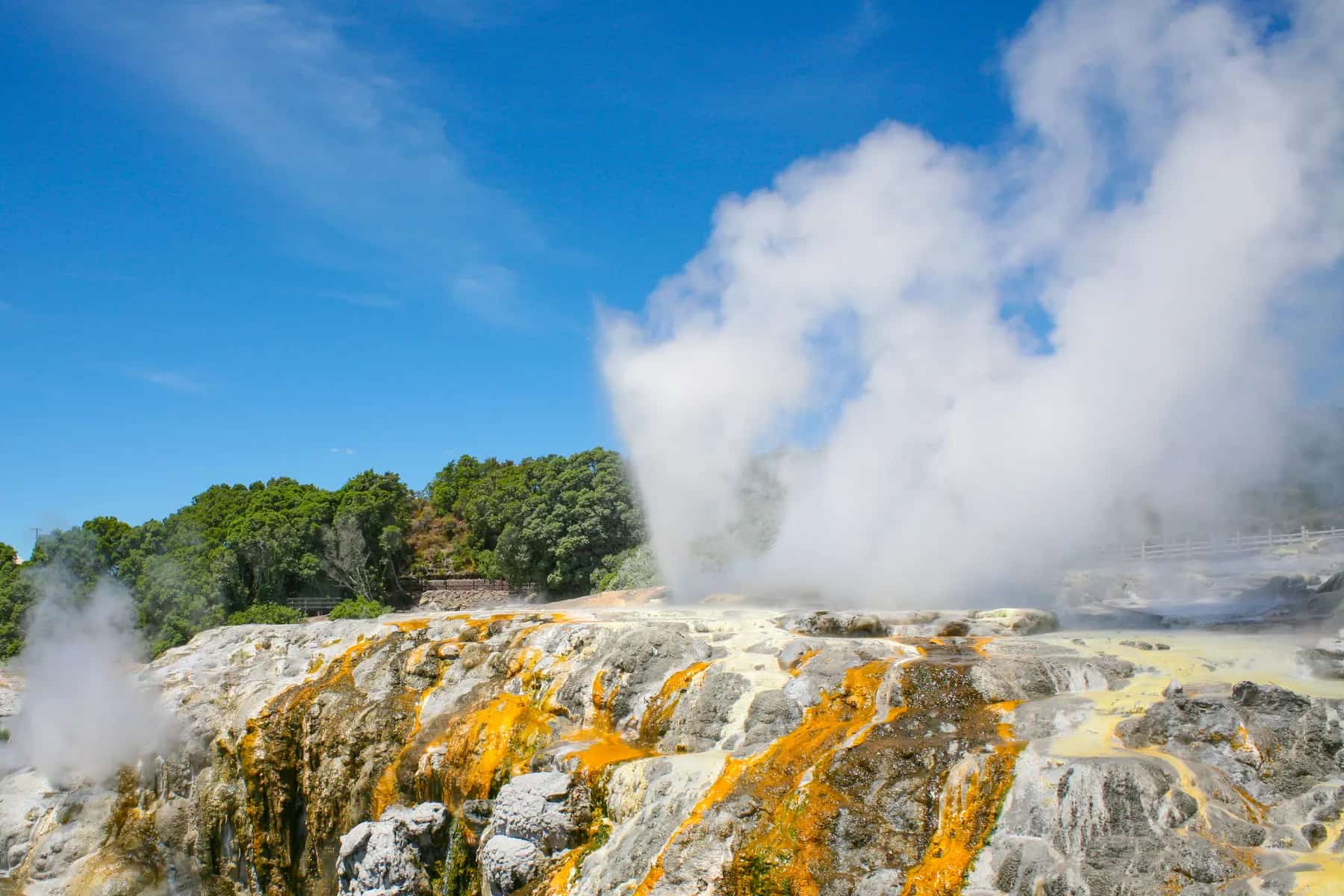
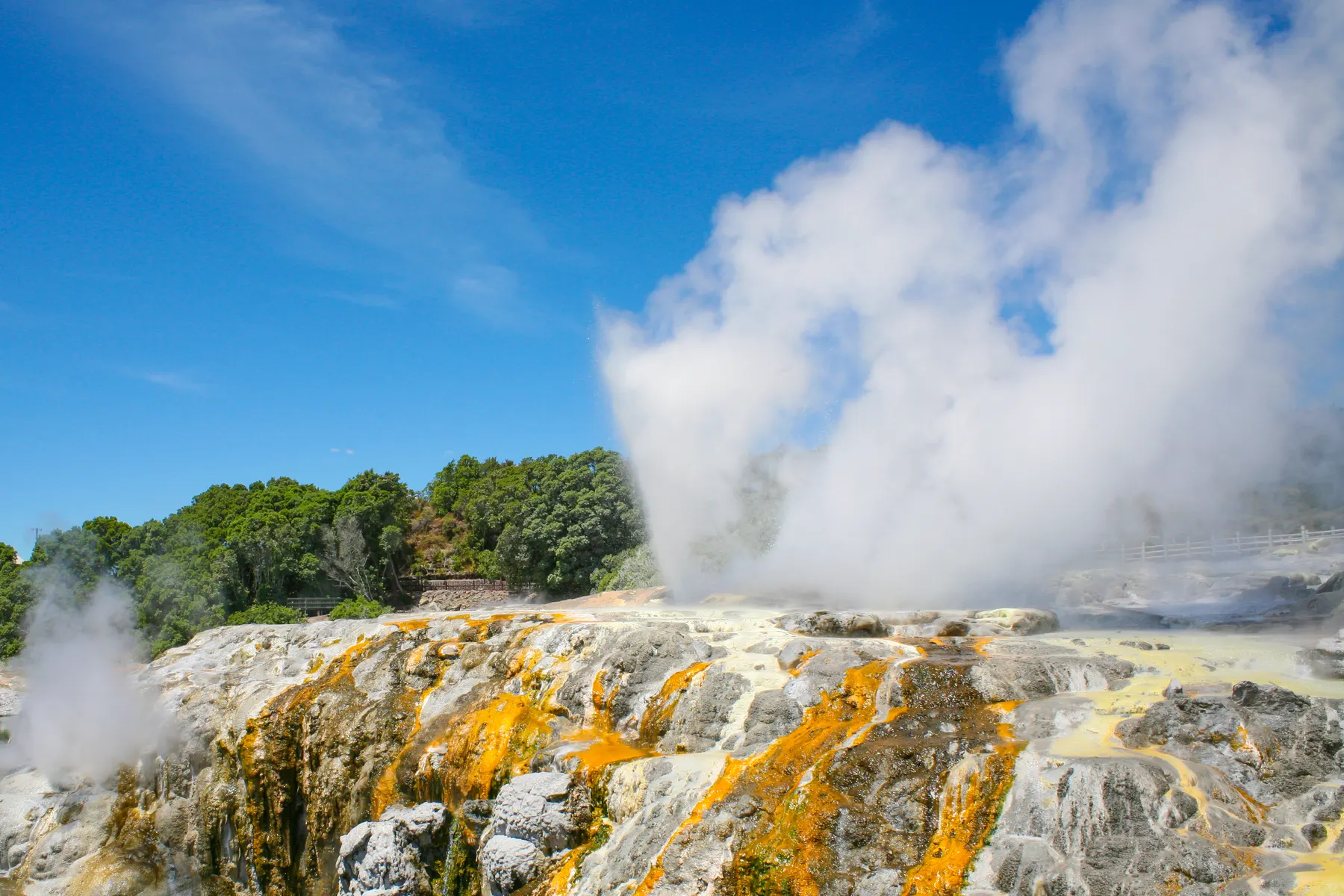
Pōhutu Geyser, Rotorua
Why do creators go to Rotorua?
Rotorua gives a New Zealand series two things no other stop offers in one place: an active geothermal field and Māori culture shared by the people it belongs to. The town sits on the shore of Lake Rotorua in the rohe (tribal area) of Te Arawa, and steam rises from parks, gardens and roadside drains. Two nights give one full geothermal day and one cultural evening without rushing either.
What does a hosted day in Rotorua look like?
A typical hosted day starts early at a geothermal park, breaks in the middle for rest and backing up footage, and ends with an evening Māori cultural experience and a hāngī dinner. Our geothermal day and cultural evening follows that shape:
- Pick-up in the cool of the morning, when the steam is most visible.
- Geysers, boiling mud and mineral pools from the boardwalks, before the tour coaches arrive.
- A walk on the lakefront, lunch on your own time, then a break at the hotel to edit and post.
- An evening welcome, performance and explanation from the hosts, then a hāngī lifted from the earth.
What else can creators film in Rotorua?
- Kuirau Park, a free public park in town with steaming pools and bubbling mud.
- The Government Gardens by the lake and the Tudor-style Bath House building, seen from outside.
- Whakarewarewa Forest, known as the Redwoods, on foot or by mountain bike.
- The larger geothermal valleys south of town on the road towards Taupō, with coloured pools and silica terraces.
- Lake Rotorua and Mokoia Island, which has its own place in Te Arawa tradition.
When is the best time to film in Rotorua?
Rotorua works all year, and cool mornings from about April to August make the steam most visible. Summer, from December to February, is warmer and busier, with longer evenings on the lakefront. Rain does not stop a geothermal day: low cloud and drizzle often make the steam look heavier on camera, and the cultural evenings are held indoors and out. Rotorua smells of sulphur in every season, which is worth a line in your content so viewers know what to expect.
Etiquette, tikanga and filming rules in Rotorua
At a Māori cultural experience you are a guest, and the hosts' tikanga (protocol) decides what happens and what can be filmed. We ask the operator in advance, and the hosts repeat the guidance on the night.
- A formal welcome can include a challenge, a call and speeches. Follow the hosts' instructions, and do not film where they ask you not to.
- Inside a wharenui (meeting house), shoes come off and filming is often not allowed. Ask first, every time.
- Some places are wāhi tapu, sacred or restricted sites. If a place is described as tapu, put the camera down.
- Haka and tā moko are taonga, not props or costumes. Do not imitate a haka for comedy or wear moko-style face paint.
- Credit the people and iwi you film by name where they agree, and write te reo Māori names with their macrons.
- Ohinemutu, the lakeside village with St Faith's Church, is a living community. Film respectfully from public areas, or not at all.
- Stay on boardwalks and marked paths: geothermal ground can be thin and the water is boiling.
- Never film in changing rooms or bathing areas where other guests are present, and assume no drones at cultural sites or geothermal parks.
Getting around Rotorua on a hosted trip
Most creators reach Rotorua from Auckland by road, about three hours, or on a short domestic flight that is your own cost; Explera never provides flights. The town is compact, and activity days use a private licensed vehicle. How you travel in and out is agreed in the itinerary before you sign.
How Rotorua fits a multi-stop trip
Rotorua pairs naturally with Auckland as a North Island loop, and Lake Taupō and the Hobbiton Movie Set at Matamata are each roughly an hour away for longer trips. Continuing to Wellington is a long drive through the central North Island. For culture and food channels Rotorua is usually the centre of the trip; see the culture niche for how we plan those collaborations, then apply.
On the ground
Experiences in Rotorua
Ready to apply for Rotorua?
The application saves as you go, and every applicant hears back within 5 business days.
Updated